Boston Common
boston common, pictures of boston
boston common
Out for a walk on Boston Common.
Achilles Project
achilles project, shopping in boston, boston boutiques
inside the achilles project in boston
The loftlike interior of the Achilles Project.
Beacon Hill
beacon hill, boston
a street in beacon hill
Graduate student Siobhan Durkin strolling in Beacon Hill.
Men\'s Crew Team
pictures of boston, boston, crew team
men\'s crew team
A men\'s crew team, a ubiquitous sight on the Charles River.
D Scale
boston boutiques, boston shopping
d scale
Home accessories at D Scale.
Louis Boston
boston, pictures of boston, louis boston
louis boston
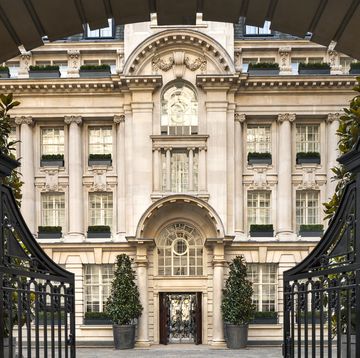
The stately facade of Louis Boston.
Mooo Restaurant
mooo restaurant, boston restaurants
mooo restaurant
Mooo restaurant, at the XV Beacon hotel.
Tim and Nancy Cushman
o ya, tim cushman, nancy cushman
tim and nancy cushman
The owners of O Ya, chef Tim Cushman and his wife, Nancy, the sake sommelier.
Oleana\'s Baked Alaska
oleana, boston restaurants
baked alaska
Oleana\'s baked Alaska with coconut ice cream.
Oleana
oleana, boston restaurants
oleana
Oleana.
Weeks Footbridge
weeks footbridge boston
weeks footbridge
The Weeks footbridge, over the Charles.
XV Beacon
xv beacon boston
xv beacon
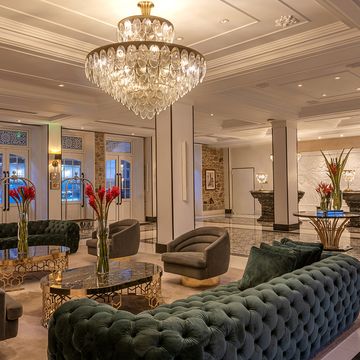
XV Beacon\'s lobby.
I'm part of a long line of native, r-dropping Bostonians. My grandfather sold Oldsmobiles alongside forties-era Red Sox shortstop Johnny Pesky back when ballplayers had to earn a living in the off-season. My mom survived twelve years of Catholic school with the infamous Trinity nuns of Jamaica Plain. And the year he turned twenty-one, my dilettante dad ran for mayor of his hometown of Everett, an Italian enclave about four miles northeast of the city. He received 108 votes, one fewer than the number of registered relatives living there at the time. "It was either Uncle Sal," he likes to joke, "or my mother," and we dutifully laugh, as if we hadn't heard the story a thousand times.
I was raised in the suburbs of Rhode Island, but my childhood was largely spent in the car, traveling to Boston for holidays and the occasional Sunday supper. In the old brown station wagon I'd later wreck en route to my first "big city" shopping trip — destination, Faneuil Hall — we'd come into town on a highway that no longer exists (courtesy of the Big Dig), a winding road in a valley of mountainous office buildings, each more imposing than the last.
When I ended up here, sometime after college, my job as style director at Boston magazine provided a crash course in the best of Boston: I became versed in the local realms of fashion, food, interior design and culture. For a city known for its great history, the seamlessness with which its old and new coexist is notable. In one sunny afternoon, I can walk the five miles from Beacon Hill, at one end of town, to Jamaica Plain, at the other, and view hundreds of years in the making, from the bronzed namesakes of the Robert McCloskey children's classic Make Way for Ducklings "parading" through the Public Garden, to the Soldier's Monument, in Jamaica Plain, honoring the local boys who died in the Civil War. Then I finish the day with wine on the patio at the Alchemist, among indie rock girls, guys from the "old neighborhood" and suburban explorers, all part of a wonderfully diverse crew.
Like many of europe's prettiest cities — Paris, London, Florence — Boston is bisected by a river. But rather than dividing it in half, the Charles separates Boston from Cambridge, which is a city in its own right, however much the two may feel of a whole. The People's Republic of Cambridge, as it's playfully called, is filled with students, superior restaurants and, according to the 2000 U.S. Census, the nation's highest per-capita concentration of million-dollar homes. Still, some would say what's most noteworthy about Cambridge is its million-dollar views of Boston. Directly across the river, Beacon Hill is alternately preppy and political: ladies in polka-dot headbands browse in Flat of the Hill, Holiday and other boutiques; politicians on breaks from sessions at the State House scarf sandwiches at the Paramount; and docs from nearby Mass General swill post-op beers at Harvard Gardens.
Adjacent to the Hill are the town houses of Brahmin-heavy Back Bay. Its main drag, Newbury Street, offers stellar people-watching (the occasional Tom and Gisele sighting included) and endless opportunities to defy the recession at high-end shops, like Burberry and Chanel. To the south, the more laid-back, tree-lined South End attracts hipsters, gay couples and young turks with hot restaurants that pour eighteen-dollar glasses of Tempranillo, upscale clothing boutiques and merchants selling imported cheese and vegan ice cream. Its counterpart across town, the North End, is the city's oldest residential neighborhood; since the early 20th century, it has been the center of the Italian community in Boston and is still drowning in red sauce. Jamaica Plain tests the borders of Boston. Gently gentrified from its previous life as a middle-class Irish-Catholic stomping ground, J.P. today is frequented by young families, creative types and academics. I adore its charming vintage and artisan shops, stately Victorian houses and abundance of bakeries.
For all the reasons to love Boston, the most significant cultural boon to the city — the recent championships of the Red Sox, Patriots and Celtics notwithstanding — has been the stunning Institute of Contemporary Art, an architecturally groundbreaking structure jutting out over Boston Harbor that was designed by the internationally acclaimed firm Diller Scofidio & Renfro. Since its December 2006 opening in the seaport, adjacent to the up-and-coming Fort Point Channel neighborhood, the museum has been perennially packed and features a permanent collection of works by Laylah Ali, Rineke Dijkstra and Nan Goldin; forward-thinking shows, among them exhibitions of work by sculptor Anish Kapoor and installation artist Tara Donovan; and guest appearances by dancers and musicians in the glass-walled theater. A whopping 200,000 visitors a year pass through the museum, inspiring even the once stodgy Museum of Fine Arts, in the Fenway, to be more hip; it now stages concerts by such acts as Vampire Weekend.
While the ica has forever altered the city's cultural landscape, the Rose Fitzgerald Kennedy Greenway has changed its topography: some fifteen acres of public parkland stand where the Big Dig construction once was. That $14.8 billion, sixteen-year project rerouted the Central Artery — the elevated highway that formerly sliced the city in two, on which I made those childhood drives — underground, easing traffic and reconnecting the North End with the rest of town. The payoff has been miraculous, and the space-age Leonard P. Zakim Bunker Hill Bridge, erected in place of the artery, has already become more iconically Boston than the Citgo sign that looms high above Fenway Park.
More than any physical landmark, though, what embodies Boston these days is a sense of constant evolution. Students no longer study here, then move. MIT is changing the world, one invention at a time. Our dining scene has reached epic heights. Newbury Street is still home to some of the city's finest shopping, but risk-taking boutiques have sprung up in unexpected places all over town.
Fifteen or so years after my first attempt, I rarely brave the crowds at Faneuil Hall anymore. I prefer the South End's SoWa Open Market, held every Sunday from mid-May through October, where purveyors of vintage clothing and modern jewelry mingle with regional artists, antiques dealers and bakers. Vendors change weekly, so one weekend I can walk away with a baguette from Clear Flour Bread; the next, a vintage-inspired couture hat from milliner Marie Galvin. That I'm paid to do this treasure hunting is merely a bonus. (A style director's job is never done.) I may not run for mayor anytime soon — though my dad certainly wouldn't object if I did — but as I stroll home at the end of another idyllic afternoon, I wouldn't live my Boston life any other way.